Guide
Custom Printed Spouted Pouches: A Guide to Sizes, Caps and Materials
Specify a spouted pouch from the product and filling process first, then choose its usable capacity, laminate and fitment together. A cap that looks right may not dispense a thick liquid, and a recyclable film may not tolerate your filling temperature. Final dimensions and compatibility must be checked against the full filled pack before production.
Pouch capacity is not the same as panel dimensions
Width, height, gusset depth, seal margins and the fitment all affect usable capacity. Space must remain for filling and sealing, so a pouch's outer dimensions alone cannot guarantee a stated millilitre fill.
Work in ml or litres for liquids and state the actual recipe. A small shot, a retail drink and a refill pack have different dispensing and handling needs. Share your target fill volume with our spouted pouch specification team rather than choosing a dry-goods size preset.
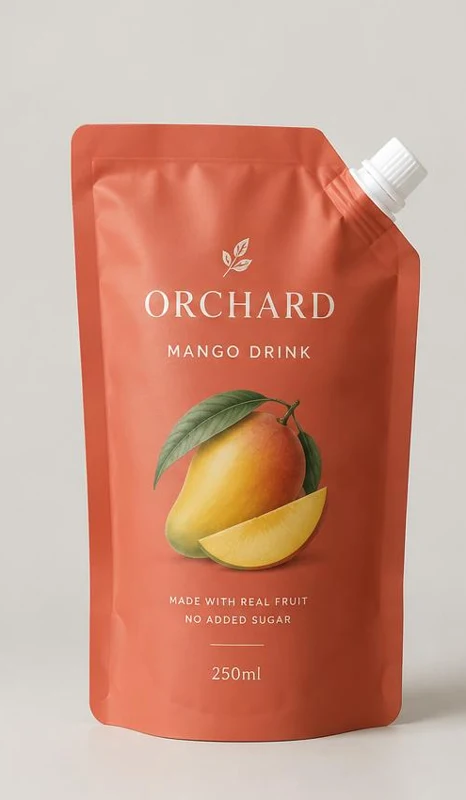
Corner versus centre spouts
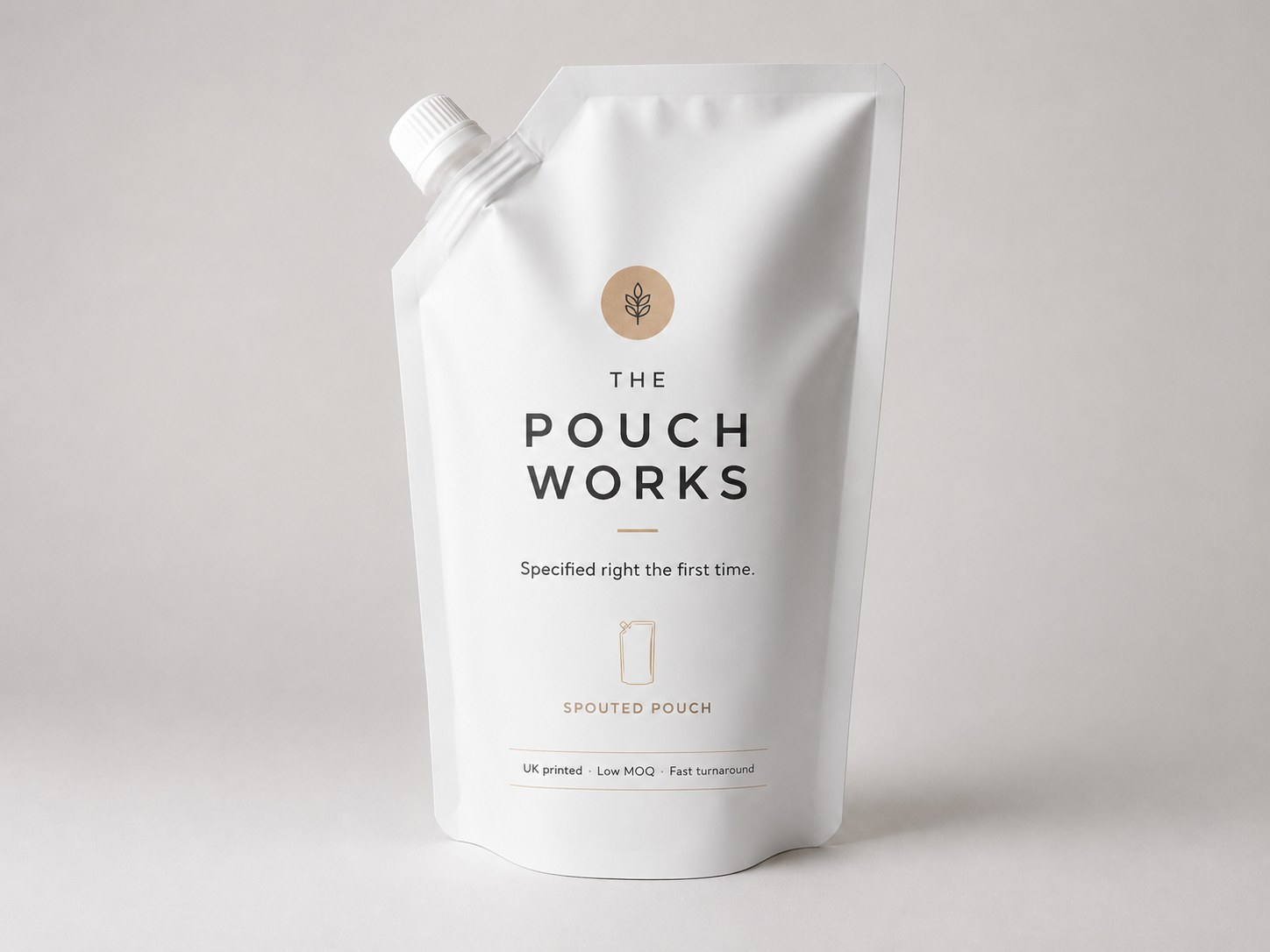
Corner spouts can make angled pouring into bottles or containers convenient. Centre-top spouts may suit direct squeeze dispensing. Neither position is universally best: the customer experience and the filler configuration should decide.
Ask your filler whether the pouch is filled through the fitment or through an open seal edge. This affects the delivered configuration and whether caps are fitted or supplied separately.
Cap diameter, dispensing and safety
Confirm the internal opening, not just an external cap measurement. Thin liquids, thick creams and products with particles need different flow characteristics. Ask whether the fitment works with your filling nozzle and intended dispensing method.
Discuss screw caps, tamper-evident features and opening effort. Standard caps are not child-resistant; where a product requires protection, the relevant tested closure and pouch combination must be confirmed. Baby-food applications also need specific cap-safety and food-contact review.
- What is the liquid's consistency at the dispensing temperature?
- Are there seeds, pulp or particles that could block the opening?
- Must the pouch pour into a narrow reusable bottle?
- Does the product require tamper evidence or a tested safety closure?
Material structures and product protection
The sealing layer must be compatible with the product, while other layers provide strength, print protection and oxygen or light barrier. Oils, acidity, alcohol, surfactants and fragrance can change the requirements. Food-contact suitability does not automatically establish suitability for a cleaning concentrate.
Foil or metallised laminates may provide strong light and oxygen protection. Transparent films show the product but allow light through. Mono-material options may suit a recycling objective where technically available; check the exact barrier, spout compatibility and disposal route rather than assume every liquid can use the same film.
| Requirement | Question to confirm |
|---|---|
| Shelf life | What protection is required against oxygen, light and moisture? |
| Compatibility | Will the actual formula affect film, seals, spout or cap? |
| Recyclability | Is the complete construction accepted in the intended collection route? |
| Mechanical performance | Will filled packs withstand handling and distribution? |
Filling temperature and processing
Cold fill, hot fill, pasteurisation and retort are different processes. State the temperature, duration, cooling stage and any later processing. Suitability must cover the complete system of laminate, seal, spout and cap.
Do not use a standard cold-fill specification for a heated process without approval. Your filler should review seal behaviour and machine compatibility, and product shelf-life validation remains essential.
Artwork and finish: design around the fitment
Use the confirmed dieline with seal zones, spout area and gusset folds marked. Keep critical type and barcodes clear of those areas. Supply print-ready CMYK artwork with the specified bleed and let the artwork review identify any risks before approval.
Matte, gloss and other finishes depend on the chosen structure and production route. Read the pouch artwork setup guide before finalising files; do not reuse a stand-up pouch dieline on a spouted construction.
Quantity and the brief you need to request a quote
Our standard eligible printed pouch range starts from 500 units per design. Spouted minimums are specification-dependent, and some mono-material constructions require 5,000 units. Your desired quantity is an enquiry, not a guaranteed production minimum.
Send the product, approximate fill volume, consistency, filling temperature, spout preference, cap requirements, quantity, number of designs and desired date. If a detail is unknown, say so: advice is more useful than an assumed technical answer.
Not sure which pouch size you need? Tell us what you are packing and we will check the specification.
Get a Spouted Pouch Quote →Related questions
Quick answers
Which type of pouch is best for liquid soap?
A fitted-spout refill pouch can work where the laminate, seals and cap are compatible with the soap formula. Confirm surfactants, fragrance, filling temperature and the bottle opening being refilled; no one structure suits every liquid soap.
Can spouted pouches be used for sauces?
Yes, using a construction matched to acidity, oils, viscosity, particles and the filling process. The internal spout opening must dispense the sauce and be compatible with the filler. Hot filling needs a specifically approved structure.
Can I choose a recyclable spouted construction?
Ask for a mono-material option against your actual product and process. It may not meet every barrier or heating requirement, and some constructions require 5,000 units. Confirm the full structure and collection route.
Still have questions? Email hello@thepouchworks.com and we'll get back to you within one business day.